
Thesis Public Defense | VNP31 – Nguyễn Thị Hồng Hạnh
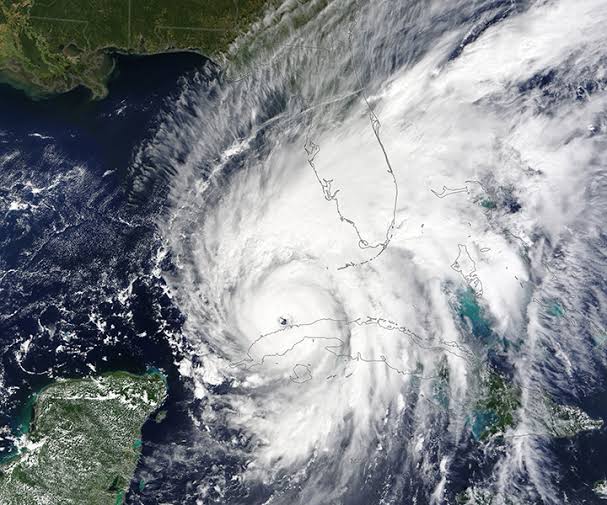
Repeated tropical-cyclone exposure and household welfare in Vietnam: Evidence from the VHLSS 2014-2024
Student: Nguyễn Thị Hồng Hạnh, VNP-31
Supervisor: Dr. Trương Đăng Thụy
Abstract:
Vietnam is highly exposed to tropical cyclones, and many households face several storms within a short period. This thesis examines whether repeated tropical-cyclone
exposure is associated with household income and consumption, using six waves of the Vietnam Household Living Standards Survey (VHLSS) from 2014 to 2024. Exposure is constructed from storm tracks in the International Best Track Archive for Climate Stewardship (IBTrACS). A province-storm pair qualifies when its 100-km buffered track intersects the province and at least one relevant track observation records a maximum sustained wind of at least 34 knots in the U.S. agency record, the threshold for tropical-storm strength. Each household is assigned the qualifying storms of the 24 full calendar months before its interview month. Models with province and survey-year fixed effects are estimated for storm frequency, cumulative recorded wind, the timing of exposure, and differences between agricultural and non-agricultural households. Pairs that are ambiguous because of missing wind observations are handled through a conservative main coding and an extremecase sensitivity coding.
The results show no robust average association between repeated exposure and real monthly per-capita income or consumption. Under the main coding, one additional
qualifying storm is associated with 0.56% lower income and 0.05% lower consumption, neither significant, and the 95% confidence intervals exclude average declines larger than about 1.5% and 0.7%, respectively. The cumulative-wind and timing specifications show no stable pattern, and 50-km and 150-km buffers yield no association significant at the 5% level. Agricultural households show more negative associations under common fixed effects, but these become small and insignificant once province and year effects vary by agricultural status. The estimates are conditional associations, not causal effects or direct measures of resilience. Finer exposure data, household panels, and direct measures of damage and coping would clarify how households respond to repeated tropical cyclones in Vietnam clarify how households respond to repeated tropical-cyclone exposure in Vietnam.
Keywords: tropical cyclones; repeated exposure; household welfare; income; consumption; VHLSS; Vietnam
JEL classification: Q54; D12; I31

