
Thesis Public Defense | VNP30 – Lê Hoàng
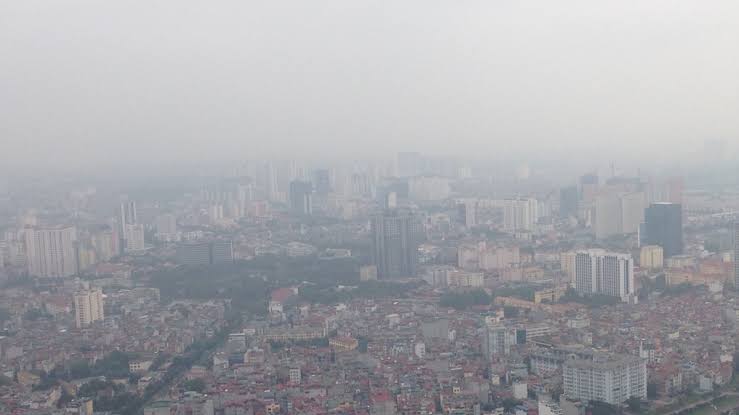
Determinants of air pollution in Vietnam: a provincial panel analysis of meteorological and sectoral drivers
Student: Lê Hoàng, VNP-30
Supervisor: Dr. Nguyễn Quang
Abstract:
Rapid economic growth has improved living standards in Vietnam but has also coincided with concerns about fine particulate matter (PM2.5) pollution, which poses challenges for public health and environmental sustainability. Existing evidence remains fragmented, with limited attention to nonlinear relationships, spatial dependence, regional heterogeneity, and the relative importance of meteorological and anthropogenic factors. This study examines the conditional associations between PM2.5 concentrations and meteorological and sectoral economic variables across Vietnam’s 63 provinces from 2012 to 2022. Using a balanced provincial panel dataset, the analysis incorporates temperature, atmospheric pressure, wind speed, precipitation, industrial production, passenger and goods transportation, construction activity, installed coal-fired power capacity, and biomass straw burning. The empirical framework combines panel regression, nonlinear specifications, spatial econometric models, regional analyses, and relative-importance decomposition. The results from the preferred two-way Fixed Effects model indicate that meteorological variables collectively account for approximately 63.36% of the model-explained variation in PM2.5 concentrations, while anthropogenic factors account for the remaining 36.64%. Among the anthropogenic variables, construction activity has the largest relative-importance allocation, at 17.87%. The preferred model also identifies statistically significant inverted Ushaped associations between PM2.5 concentrations and both construction activity and installed coal-fired power capacity. However, the estimated relationships vary across model specifications: passenger transportation exhibits a statistically significant nonlinear association in the spatial models, whereas its linear and quadratic terms are not statistically significant in the preferred twoway Fixed Effects model. The spatial econometric results indicate positive and statistically significant spatial dependence, while the regional analyses reveal substantial heterogeneity in the associations between PM2.5 concentrations, meteorological conditions, and sectoral economic activities across Vietnam’s six socio-economic regions. These findings underscore the importance of accounting for meteorological conditions, nonlinear relationships, spatial dependence, and regional differences when interpreting provincial PM2.5 patterns. Policy considerations may include strengthening construction dust management, improving transportation and power-sector emissions controls, and developing region-specific air-quality strategies. Nevertheless, the estimated relationships represent conditional associations and do not establish causal effects of individual factors or the effectiveness of particular policy interventions.
Keywords: PM2.5 pollution, fixed effects model, Vietnam

